
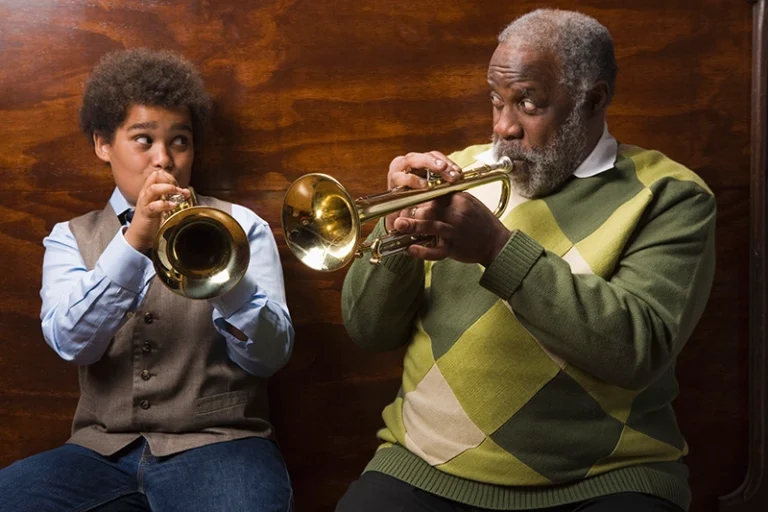
We often hear about brain games, reading, and staying social to preserve mental sharpness. But there’s an equally powerful—and much more enjoyable—way to keep the brain active: learning to play a musical instrument.
If you’re exploring creative cognitive exercises for aging parents, music might be the perfect fit. Studies suggest that older adults who regularly play instruments perform better in areas like reasoning, focus, and memory than those who don’t.
One large-scale study revealed that older participants involved in music showed stronger performance in:
- Working memory: Retaining details and applying them in the moment
- Executive function: Problem-solving, strategizing, and adaptability
- Attention and processing: Focusing clearly while reacting quickly
Although music cannot prevent dementia, it helps fortify the brain, giving it tools to handle aging gracefully.
The Brain’s Symphony in Action
What makes playing an instrument such a profound brain exercise?
When Dad strums a guitar or blows into a saxophone, his brain is firing on all cylinders. Reading notes, synchronizing movements, keeping rhythm, and monitoring pitch all happen simultaneously. Each task stimulates different brain regions—visual, auditory, and motor—creating a complex, dynamic workout.
Researchers refer to the outcome as cognitive reserve, meaning the brain retains flexibility that helps it recover and adapt as time passes.
Music demands interaction, not simple observation—it’s one of the most mentally engaging hobbies available.
New Players Welcome at Any Age
Encouragingly, these cognitive rewards don’t require a lifelong relationship with music.
Even starting lessons later in life triggers neuroplasticity, the brain’s remarkable capacity to form new neural routes and strengthen old ones. When seniors learn a new skill, their brains respond much like they did when they were younger.
Supporting your parent’s musical curiosity is simple when approached with patience and enjoyment:
- Introduce an instrument they once enjoyed
- Find a gentle instructor or use online tutorials
- Keep practice short and consistent
- Celebrate progress, not perfect performance
Engaging for just 15 to 20 minutes several days a week can deliver meaningful cognitive benefits.
Music’s Unique Ability to Build Community
Music’s effects reach beyond intellect—they uplift mood and foster community.
Familiar melodies can unlock memories buried deep in time, helping reconnect seniors to key moments in their lives. The sense of accomplishment gained from mastering a piece of music can enhance confidence and self-worth.
Participating in a group class or ensemble also brings joy through friendship, laughter, and shared creativity—key elements for emotional and social wellness.
Supporting Continued Engagement
While you can’t control the pace of aging, you can nurture opportunities for joy and challenge.
If your parent needs extra support to stay consistent or active, Superior Senior Home Care caregivers are ready to help. They provide structure, motivation, and companionship that encourage lasting involvement in meaningful activities like music.
Reach out to us at 805-737-4357 to learn how our in-home care services in Santa Ynez, Lompoc, Nipomo, and nearby cities can help your parent experience the brain-boosting power of music every day.